


Creative Photoshoots Don’t Need a Big Budget
For me, a creative photoshoot isn’t necessarily about building an expensive set or buying lots of new props. Often, it’s about taking a simple portrait and adding one small detail that makes it feel much more interesting.
A piece of paper, some leftover fabric or an old paper backdrop can completely change an image. These things cost very little, but with the right colours, lighting and styling, they can make a portrait feel extraordinary.
Let me show you three examples.
A handmade paper flower
The first portrait was created with a very simple setup: a black backdrop, two black V-flats and two beautiful, soft lights. You could even create something similar using just one soft light.
The woman in the portrait came to my studio as part of my 40 Over 40 photography project. The project celebrates 40 women over the age of 40 through their portraits and personal stories.

When we started her session, we took our time. I gently guided her body, adjusted her posture and explored different angles until we found the positions that photographed her beautifully. The portraits already looked lovely, but I wanted to create something a little more unusual for her too.
The night before the photoshoot, I made a large blue flower from crepe paper. I originally imagined using it with a completely different outfit that I had prepared. But when she arrived and showed me her green dress, I immediately knew that the colours would work beautifully together.
And they did.


Blue and green crape paper
The contrast between the blue flower, the green dress and the black background made the portrait feel bold and artistic, even though the set itself was incredibly simple.
Crepe paper is inexpensive and quite easy to work with. You can find plenty of tutorials online showing you how to make oversized paper flowers. The materials cost very little, although you do need to invest some time in watching the tutorials, experimenting and making the flower.
For me, that time is worth it when I see how much one handmade detail can transform a portrait.
A small piece of green fabric
The second example came from a creative portrait session celebrating my client’s 30th birthday.
Before the photoshoot, she showed me stills from the 2007 romantic war drama Atonement. She particularly loved the famous green dress worn by Keira Knightley in the film. She then showed me a very similar dress she had found for her own photoshoot, as well as a mood board created with ChatGPT using her dress and the film as inspiration.
stills from the 2007 romantic war drama Atonement. green dress
It gave me a very clear understanding of the mood she wanted: romantic, cinematic, elegant and slightly dramatic. I felt confident that we could create something beautiful from that direction.
When she arrived at the studio, we began by creating portraits with the dress on its own. They already looked beautiful, but I wanted to add more depth and movement to the images.


That was when I introduced a piece of lightweight, transparent green fabric.
I had bought it from a shop that sells leftover fabric by weight, so it cost very little. I placed it in front of her and allowed it to fall softly into the frame. Because the fabric was slightly transparent, we could still see her through it, while its folds created layers, softness and a more cinematic feeling.


It was such a small addition, but I knew it would enhance the portrait enormously.
This is why I like collecting interesting pieces of fabric. You don’t always need metres and metres of expensive material. Sometimes a small remnant is enough to place in front of the lens, wrap loosely around the sitter or use to create movement in the background.
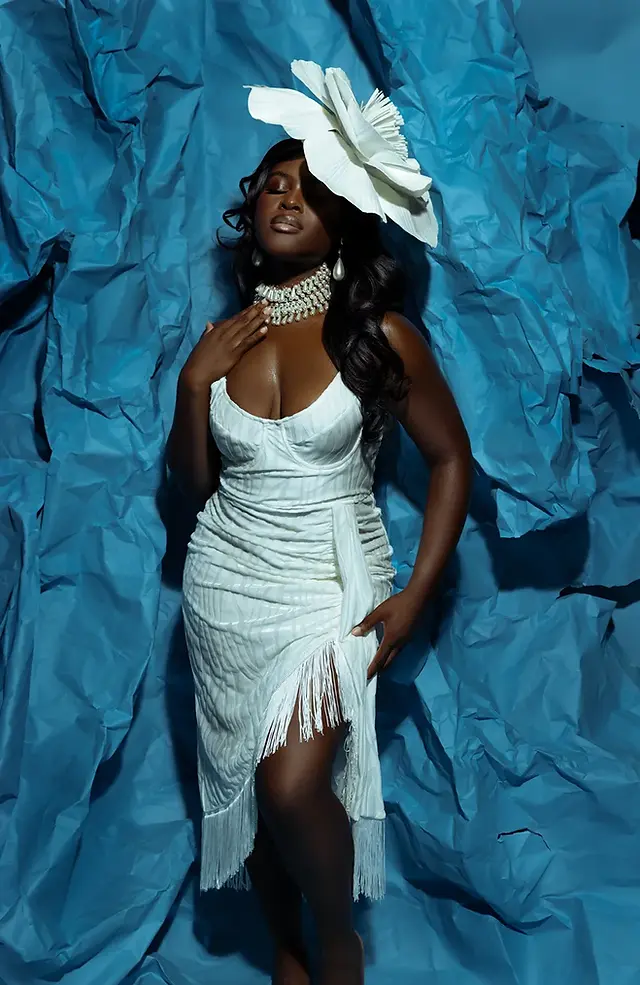
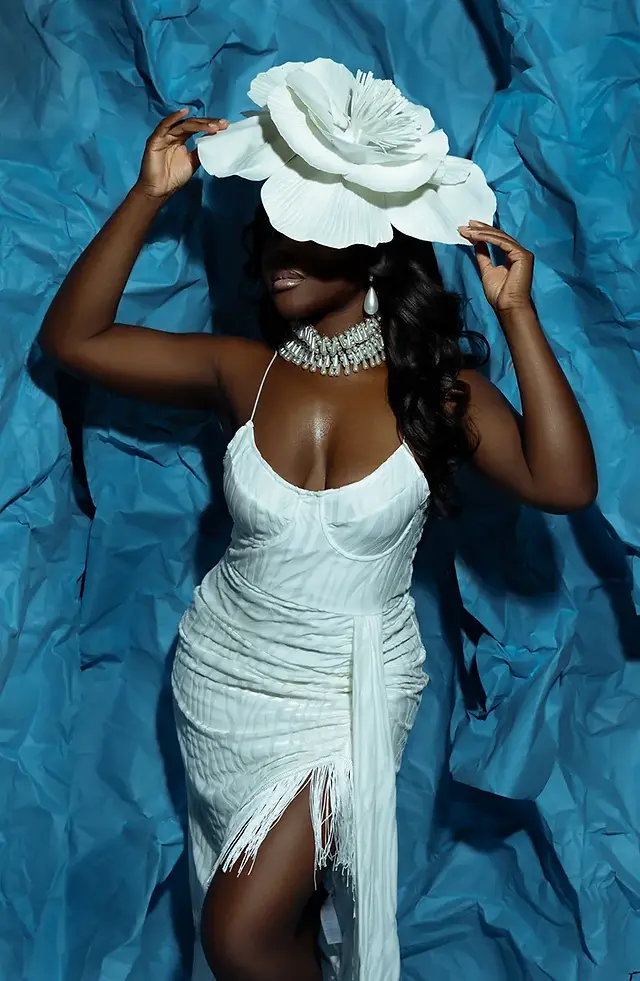
A backdrop made from paper that was going to be thrown away
The third idea might be the simplest and cheapest of all: reusing the end of a paper backdrop roll.
When a paper backdrop becomes marked, damaged or too short to use normally, you have two choices. You can put it in the recycling, or you can experiment with it first and see what else it might become.


For this set, I repeatedly bent, folded and crushed the leftover paper. I then arranged the pieces together to create a textured paper wall.
I lit it with one harder light because I wanted the folds to cast visible shadows. When the light hit the paper, all those simple bends and creases created depth, shape and texture. Something that had almost been thrown away suddenly looked like a carefully designed portrait set.


That is what I enjoy most about creative portrait photography: seeing the possibilities in very ordinary materials.
Creativity is more important than cost
To construct something for a photoshoot and have creative ideas on a small budget is absolutely possible and none of these ideas required a big budget.
The paper flower was made from inexpensive crepe paper. The green fabric was a leftover piece bought by weight. The textured wall was created from an old paper backdrop that would otherwise have been recycled.
What made them work wasn’t their price. It was the combination of colour, texture, styling, posing and light.
Of course, you do need to develop a good eye for combining colours and materials. This takes time, and I believe it is something we continue learning throughout our creative lives.
One of the best ways to train your eye is simply to look at lots of images. Study paintings, films, fashion editorials, photography, theatre sets and interior design. Notice which colour combinations immediately attract you and which ones make you think, “I would never put those colours together.”
Sometimes an unusual colour combination will feel completely wrong to you. At other times, two unexpected colours will look exciting and beautiful. There isn’t one formula that every photographer has to follow. You need to discover what works for your own eye and the kind of work you want to create.
Save the images you love. Look for patterns. Are you drawn to soft, similar tones or bold contrasts? Do you prefer clean sets or lots of texture? Do you like translucent fabrics, handmade objects or simple materials used in unexpected ways?
Over time, these choices begin to shape your own visual style.
For me, a creative photoshoot isn’t defined by how much money was spent on the set. It is about imagination. It is about looking at a small piece of paper or fabric and asking, “What could I create with this?”
Sometimes the simplest materials lead to the most extraordinary portraits.


Comments